- Approximately in the middle of the image at the transition of the white mycelium
- Top rightmost
Wednesday, 21 June 2023
Don't keep wakame in the fridge for too long
Thursday, 11 November 2021
Artery from another perspective
The preparation of the artery shown in both images is of unknown origin and the staining method is unknown as well.
A fluorescence image of an artery tissue as shown here is not usual. The preparation is more or less evenly green fluorescent colored, because the dye used has attached itself to the structural parts of the preparation. We see a fluorescence color image with details as you might encounter in bright field microscopy with dyes such as e.g. toluidine blue. Such dyes show more or less the same details in the preparation with ordinary bright field microscopy as is shown in the first image.
As mentioned before, visualizing a histological specimen completely by using a fluorescent substance is unusual, because here you apply only one color that shows no specific adhesion, except for proteins, because e.g. fat is uncolored in this preparation. With a normal hematoxylin and eosin staining you have more differentiation, namely in the cell core (DNA, dark blue) and proteins, cytoplasm (pink)
In histology, fluorescence is mainly used after a fluorescent substance has been chemically attached to a specific component present in the tissue.
On the fluorescent image of the preparation the parts of an artery can also be seen. The lumen is filled with green colored red blood cells, then there is a very thin (barely visible) layer of endothelium, the meandering lamina elastica interna (clearly visible) a layer of smooth muscle, the thinner lamina elastica externa (clearly visible), the adventitia (connective tissue) that turns into adipose (fat) tissue.
© www.willemsmicroscope.com
Thursday, 21 October 2021
Thousands of small lenses work together
Seen from the front, the head of the honeybee has a triangular shape, the head of the drone it is more round. On the head are the eyes, antennae and mouth parts. Important glands are located in the head and the main center of the nervous system: a nerve bud that serves as a brain.
Friday, 15 October 2021
A switching station
Ganglia are part of the peripheral nervous system. The peripheral nervous system includes all nerves outside the central nervous system (bundles of long nerve shoots with supporting cells) and small centers of nerve cells the ganglia.
A ganglion is a combination of mainly cell bodies (ganglion cells) with the nucleus of the nerve cell surrounded by cytoplasm without further shoots. This cell body with the nucleus as its center forms the metabolic center of the cell and is sensitive to stimuli. Ganglia function as switching stations for nerve impulses.
Wednesday, 6 October 2021
A pest from Africa
The southern green stinkbug (Nezara viridula) is a relatively new pest that originates from Ethiopia. The pest has a large number of host plants, but in horticulture this bug is mainly found in bell pepper cultivation. In the first instance, in The Netherlands, the southern green stink bug was only spotted at the end of the summer, but the bug has also shown itself earlier in the season in recent years.
Females lay around 30 to 130 eggs at a time. They do this in "glued together", yellow and white clusters at the bottom of the leaf. If they are just laid, they look like little pearls. Depending on the temperature, the eggs hatch after 4 days to 3 weeks and the empty eggs remain on the leaf. The nymphs initially stay together and do not yet affect the plant. They then go through different stages, each time shedding their skin, with each stage having a different appearance. In the fifth stage, the bugs begin to spread over the plant and eat it.
Wednesday, 29 September 2021
Ficus carica petiole and Wacker 3A staining
Vascular bundles can be seen very well in these cross-sectional views of a leaf stem of the fig tree, thanks to the Wacker 3A triple staining. This coloring is done with a mixture containing Astra blue, Acriflavin and Acridine red.
Due to the good uniform thickness of the coupe and the fine quality of the Moticam S12 camera, the photos could be taken without stacking.
Tuesday, 21 September 2021
Sundew
Sundew or Drosera forms perfect rosettes to the ground and has red tentacles with a sticky, glittering droplet which is secreted by a gland. The flower owes its name to this. Small animals get stuck in the drop and are pushed by the moving tentacles to the leaf surface where they are digested.
Prepared slide by Lieder
Monday, 13 September 2021
Kahler's disease
The disease owes its name to the Austrian doctor Otto Kahler, who described the disease as one of the first. Kahler's disease, also called multiple myeloma, is a disease of the bone marrow caused by an uncontrolled proliferation of a certain type of white blood cells: plasma cells (also called plasmocytes). Plasma cells are responsible for the formation of antibodies under normal conditions.
The bone marrow is a spongy substance located in the interior of bones, especially the pelvis, sternum, ribs and vertebrae. Bone marrow plays a role in forming bones, but also in forming the cells of the blood: white blood cells (leucocytes), red blood cells (erythrocytes) and platelets (thrombocytes). The disease develops in one abnormal plasma cell, which divides uncontrollably and whose offspring also divides uncontrollably. Since they are all related, they only synthesize one specific type of antibody (or part of it). Since antibodies are proteins, the antibody produced is referred to as the "M protein" (from Myeloma protein). The name paraprotein is also commonly used for the M protein. When a specific piece (called “light chain”) of a paraprotein is found in the urine (or blood serum), it is called the Bence-Jones protein.
Friday, 10 September 2021
It grows on tree trunks
Dilated scalewort or Frullania dilatata grows mainly as a pioneer on trees with a moderately nutrient-rich bark. The species is somewhat drought-tolerant and can be found on free-standing trees, except in forests. Especially in full sun, the plants have their characteristic rust brown color. This moss experienced a decline in the last century due to air pollution, but is now common in almost all parts of The Netherlands. It is an attractive species, which is not easily overlooked in inventories. As a result, the distribution picture does suggest a greater number of occurrences than is actually the case: regularly there is only a single find per square section of land of 1 x 1 km.
Friday, 3 September 2021
Tempskya, growing millions of years ago
Tempskya is an extinct genus of tree-shaped ferns, the fossils of which have so far only been found in Cretaceous layers. The Cretaceous is a geologic period and system that spans 79 million years from the end of the Jurassic period 145 million years ago to the beginning of the Paleogene period 66 million years ago.
Thursday, 26 August 2021
Which freshwater algae do we see?
In the video you will find some algae found in fens in the ‘Wortel Kolonie’ located in Belgium. The ‘Wortel Kolonie’ is a beautiful protected nature reserve with a complex of buildings that served as an asylum for vagrants long time ago. (Here you will find the information in Dutch, English, French and German).
This nature reserve contains a few shallow fens. On a summer day in July, some water samples were taken from two fens using a trawl net with a mesh size of 30 microns. Without examining these samples in depth, more than fifty different organisms, phyto- and zooplankton, were found. Only a few of them are shown in the video. In one of the algae we see a oogonium.
The names of the organisms in the video are deliberately omitted here, to give hydrobiology enthusiasts the opportunity to identify the organisms themselves.
Tuesday, 17 August 2021
Vorticella - The fastest bell in the world?
Vorticella is a genus of single celled organisms living in both marine- and freshwater habitats. The members of the vorticella genus are commonly referred to as bell animalcules because of their shape. The thing that makes bell animalcules unique are their long stalks which they use to attach themselves to a substrate, which could be things like rocks, twigs and even small animals. The stalks of vorticella resemble our muscle fibers but are able to contract a lot faster than our muscles are. If the cell gets disturbed, it’s able to contract the stalk with an impressive speed of up to 6 meters per second as a defence mechanism to get away from danger or possibly scare predators away.
Thursday, 12 August 2021
Built for speed
The peregrine falcon is one of the fastest birds in the sky. During level flight, with motion generated by wing-beats alone, they can reach speeds between 60-100 km/h. This is one of the fastest known speeds for level flight.
Tuesday, 3 August 2021
Mint
Mentha spicata (Green Mint) is a low, creeping and rather invasive plant that is indispensable in a fragrant border. Mentha spicata blooms with small pale purple or pink flowers. It easily grows widely on all soil types and will certainly have to be kept under control. It is an herb with numerous uses, both kitchen use and medicinal. On the photo you can see covering hairs and glandular trichomes from which the typical aromatic substances are excreted.
Tuesday, 27 July 2021
One Coleps makes two, cell division
- Alga: Coleps
- Order: Prorodontida Corliss, 1974
- Family: Colepidae Ehrenberg, 1838
- Genus: Coleps Nitzsch, 1827
Coleps is a barrel-shaped ciliate, notable for its regularly arranged ectoplasmic shields, or platelets, of calcium carbonate. The covering with the scales is sometimes completely or partly absent immediately after an amitotic division (direct cleavage of the nucleus without the formation of mitoses). This is clearly visible in the accompanying video. Cell division took approximately 45 minutes. The color of the cell is usually brown and is less determined by the color of the food consumed than with other ciliates.
Wednesday, 21 July 2021
Giant chromosomes
On the image, swellings, so called puffs, can be seen at particular sites along the length of the polytene chromosome. These are diffuse uncoiled regions where transcription is actively taking place.
Polytene = composed of many chromatides
Gene = a piece of DNA containing certain hereditary characteristics
Thursday, 15 July 2021
New Zealand flax
Phormium tenax or New Zaeland flax are evergreen perennials, making a large clump of leathery, strap-shaped leaves coming to a decided point, with tall panicles of small, tubular flowers in summer.
New Zealand flax is an excellent fiber plant, hence the association with real flax (Linum usitatissimum) that is grown in Europe. The fibers of the leaves, up to 2 m long, were used by the Maori to make clothes, bags and shoes, and later the Europeans made rope and sails. All parts of the plant were used: for medicine made from roots, face powder from flower pollen and old blooming stems roped together as rafts.
Wednesday, 14 July 2021
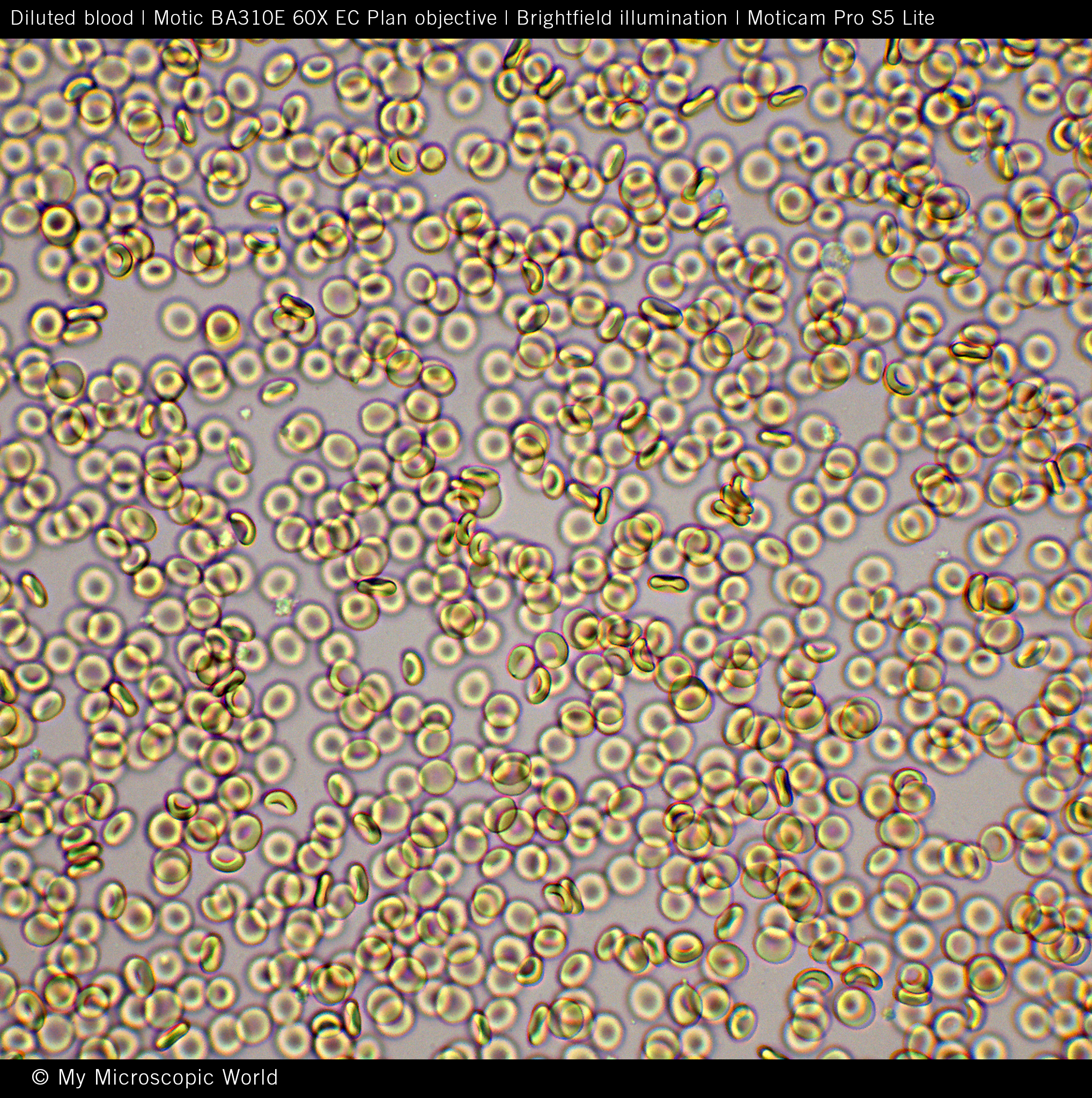
What exactly is the function of our red blood cells?
Red blood cells (RBCs) also known as erythrocytes are the most abundant cell in the human body. With a staggering number of 25 trillion cells, yes TRILLION, the red blood cells make up around 80% of all your cells. The reason why we have so many of them is because they have a few incredibly important functions critical to our life.
Friday, 9 July 2021
Cornwallite, conicalcite and other minerals from the Reconquistada prospect, Dolores mine, Pastrana, Mazarrón, Murcia
The “Reconquistada” claim is made up of small extractive mining works near the “Dolores” iron mine, in the municipality of Pastrana (Murcia, Spain). In this area there are various exploitations that benefited copper ores. In the case of the “Reconquistada” mineral species, the presence of arsenic in the mineral composition made copper extraction difficult.
From a scientific point of view, these mining works have been important due to the numerous species found. Three of them were identified for the first time worldwide in this mines: barahonaite-(Fe), barahonaite-(Al) and cobaltarthurite (Jambor et al., 2002; Viñals et al., 2008).
But there are other interesting and very colourful minerals. Two of them are very similar in appearance, but distinguishable under magnification: cornwallite and conichalcite. Both are copper arsenates, but conichalcite contains calcium. Cornwallite appears as spherical globules, with a smooth and very brilliant surface, usually with a lighter green color than conichalcite. Conichalcite tends to have a rough surface and a more intense colour.
In this specimen of the photograph, various botryoidal aggregates of conichalcite could be observed, with the characteristics described before, together with an isolated sphere of cornwallite. They are disposed on a matrix with yukonite (an iron and calcium arsenate).