Thursday, 26 August 2021

Which freshwater algae do we see?

In the video you will find some algae found in fens in the ‘Wortel Kolonie’ located in Belgium. The ‘Wortel Kolonie’ is a beautiful protected nature reserve with a complex of buildings that served as an asylum for vagrants long time ago. (Here you will find the information in Dutch, English, French and German).

This nature reserve contains a few shallow fens. On a summer day in July, some water samples were taken from two fens using a trawl net with a mesh size of 30 microns. Without examining these samples in depth, more than fifty different organisms, phyto- and zooplankton, were found. Only a few of them are shown in the video. In one of the algae we see a oogonium.

The names of the organisms in the video are deliberately omitted here, to give hydrobiology enthusiasts the opportunity to identify the organisms themselves.

Friday, 20 August 2021

Drill a hole before you can eat

The whelk or Buccinum undatum (Linnaeus, 1758) belongs to the snails (Gastropoda).

The whelk is a large, thick predatory snail with 7 or 8 turns. A deep seam runs between the turns. The mouth opening takes up almost half of the shell and ends in a sipho. On the surface there are horizontal ribs and clear vertical growth lines. Often there are also vertical ribs at the top of the shell. It grows up to 11 cm high and 7 cm wide. The whelk has yellowish-white with dark spots. Whelks washed ashore are often dark blue, because they have been lying on the bottom of the sea for a long time.


Tuesday, 17 August 2021

Vorticella - The fastest bell in the world?

Vorticella is a genus of single celled organisms living in both marine- and freshwater habitats. The members of the vorticella genus are commonly referred to as bell animalcules because of their shape. The thing that makes bell animalcules unique are their long stalks which they use to attach themselves to a substrate, which could be things like rocks, twigs and even small animals. The stalks of vorticella resemble our muscle fibers but are able to contract a lot faster than our muscles are. If the cell gets disturbed, it’s able to contract the stalk with an impressive speed of up to 6 meters per second as a defence mechanism to get away from danger or possibly scare predators away.

Thursday, 12 August 2021

Built for speed

The peregrine falcon is one of the fastest birds in the sky. During level flight, with motion generated by wing-beats alone, they can reach speeds between 60-100 km/h. This is one of the fastest known speeds for level flight.

Tuesday, 3 August 2021

Mint

Mentha spicata (Green Mint) is a low, creeping and rather invasive plant that is indispensable in a fragrant border. Mentha spicata blooms with small pale purple or pink flowers. It easily grows widely on all soil types and will certainly have to be kept under control. It is an herb with numerous uses, both kitchen use and medicinal. On the photo you can see covering hairs and glandular trichomes from which the typical aromatic substances are excreted.


© www.willemsmicroscope.com

Tuesday, 27 July 2021

One Coleps makes two, cell division

  • Alga: Coleps
  • Order: Prorodontida Corliss, 1974
  • Family:  Colepidae Ehrenberg, 1838
  • Genus: Coleps Nitzsch, 1827


Coleps is a barrel-shaped ciliate, notable for its regularly arranged ectoplasmic shields, or platelets, of calcium carbonate. The covering with the scales is sometimes completely or partly absent immediately after an amitotic division (direct cleavage of the nucleus without the formation of mitoses). This is clearly visible in the accompanying video. Cell division took approximately 45 minutes. The color of the cell is usually brown and is less determined by the color of the food consumed than with other ciliates.

Wednesday, 21 July 2021

Giant chromosomes

Giant chromosomes (or polytene chromosomes) are found in the cells of larvae of flies and mosquitoes, in springtails and in some other invertebrates. In mosquitoes we find them, for example, in the cells of the bug Chironomus and in the cells of flies like Drosophila (fruit fly). The growth of these larvae occurs because the cells grow in size, not in number. The chromosomes also grow in size because the DNA multiplies many times without the cell or nucleus dividing. A giant chromosome therefore consists of hundreds to thousands of undivided chromatides. The chromatids have a sequence of light and dark bands, the so-called chromomers. Due to the dimensions of the giant chromosomes, these bands are very noticeable. On the basis of these bands it is easy to indicate where the genes are located on the giant chromosome (called ‘gene mapping’)


On the image, swellings, so called puffs, can be seen at particular sites along the length of the polytene chromosome. These are diffuse uncoiled regions where transcription is actively taking place.

Polytene = composed of many chromatides
Chromatides = the two identical parts of a chromosome
Gene = a piece of DNA containing certain hereditary characteristics
© www.willemsmicroscope.com

Thursday, 15 July 2021

New Zealand flax

Phormium tenax or New Zaeland flax are evergreen perennials, making a large clump of leathery, strap-shaped leaves coming to a decided point, with tall panicles of small, tubular flowers in summer.

New Zealand flax is an excellent fiber plant, hence the association with real flax (Linum usitatissimum) that is grown in Europe. The fibers of the leaves, up to 2 m long, were used by the Maori to make clothes, bags and shoes, and later the Europeans made rope and sails. All parts of the plant were used: for medicine made from roots, face powder from flower pollen and old blooming stems roped together as rafts.


Wednesday, 14 July 2021

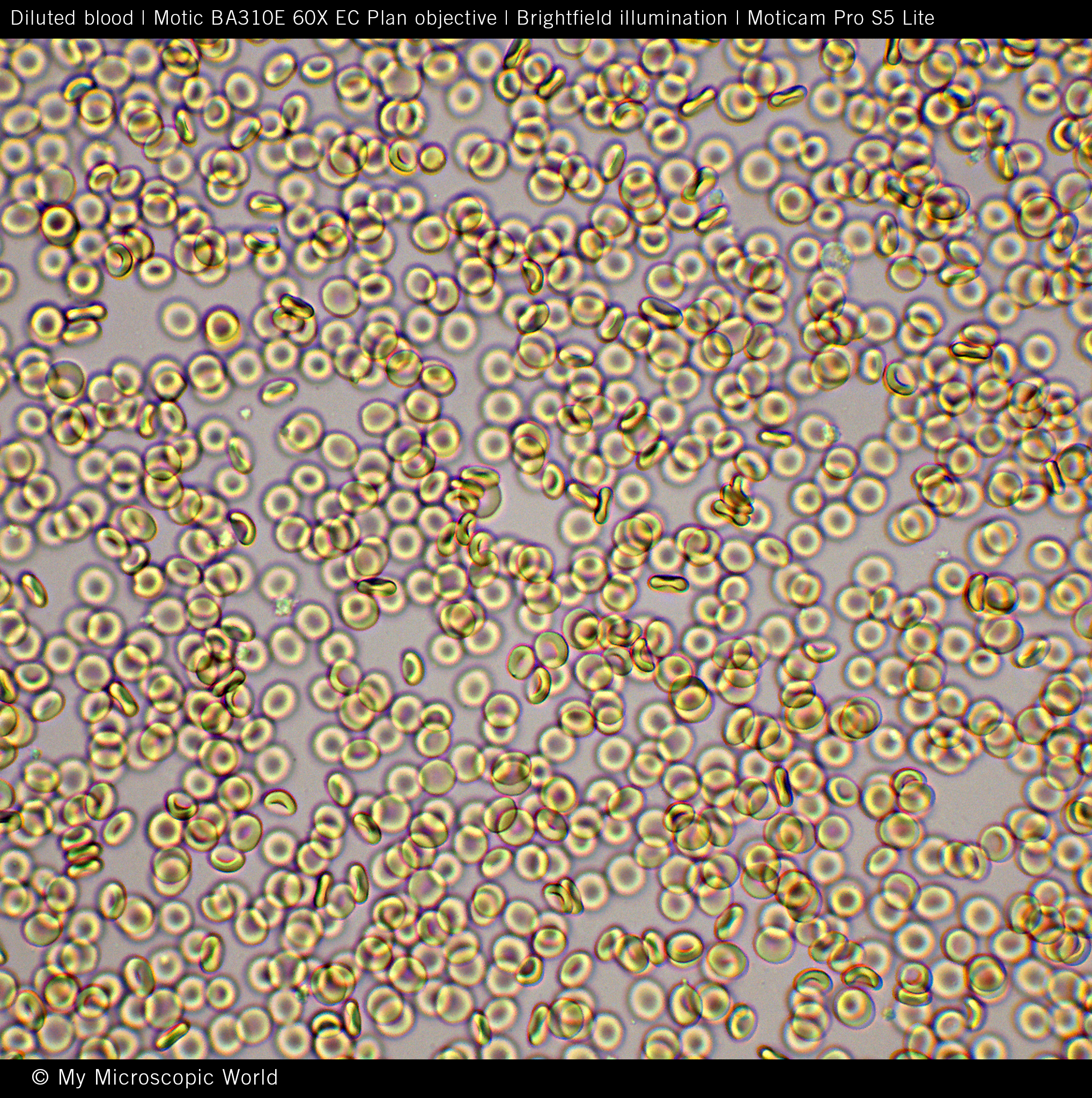
What exactly is the function of our red blood cells?

Red blood cells (RBCs) also known as erythrocytes are the most abundant cell in the human body. With a staggering number of 25 trillion cells, yes TRILLION, the red blood cells make up around 80% of all your cells. The reason why we have so many of them is because they have a few incredibly important functions critical to our life.

Notice the characteristic donut-shape.

Friday, 9 July 2021

Cornwallite, conicalcite and other minerals from the Reconquistada prospect, Dolores mine, Pastrana, Mazarrón, Murcia

The “Reconquistada” claim is made up of small extractive mining works near the “Dolores” iron mine, in the municipality of Pastrana (Murcia, Spain). In this area there are various exploitations that benefited copper ores. In the case of the “Reconquistada” mineral species, the presence of arsenic in the mineral composition made copper extraction difficult.

From a scientific point of view, these mining works have been important due to the numerous species found. Three of them were identified for the first time worldwide in this mines: barahonaite-(Fe), barahonaite-(Al) and cobaltarthurite (Jambor et al., 2002; Viñals et al., 2008).

But there are other interesting and very colourful minerals. Two of them are very similar in appearance, but distinguishable under magnification: cornwallite and conichalcite. Both are copper arsenates, but conichalcite contains calcium. Cornwallite appears as spherical globules, with a smooth and very brilliant surface, usually with a lighter green color than conichalcite. Conichalcite tends to have a rough surface and a more intense colour.

In this specimen of the photograph, various botryoidal aggregates of conichalcite could be observed, with the characteristics described before, together with an isolated sphere of cornwallite. They are disposed on a matrix with yukonite (an iron and calcium arsenate).

Globular aggregates of conichalcite with internal radiated crystals